
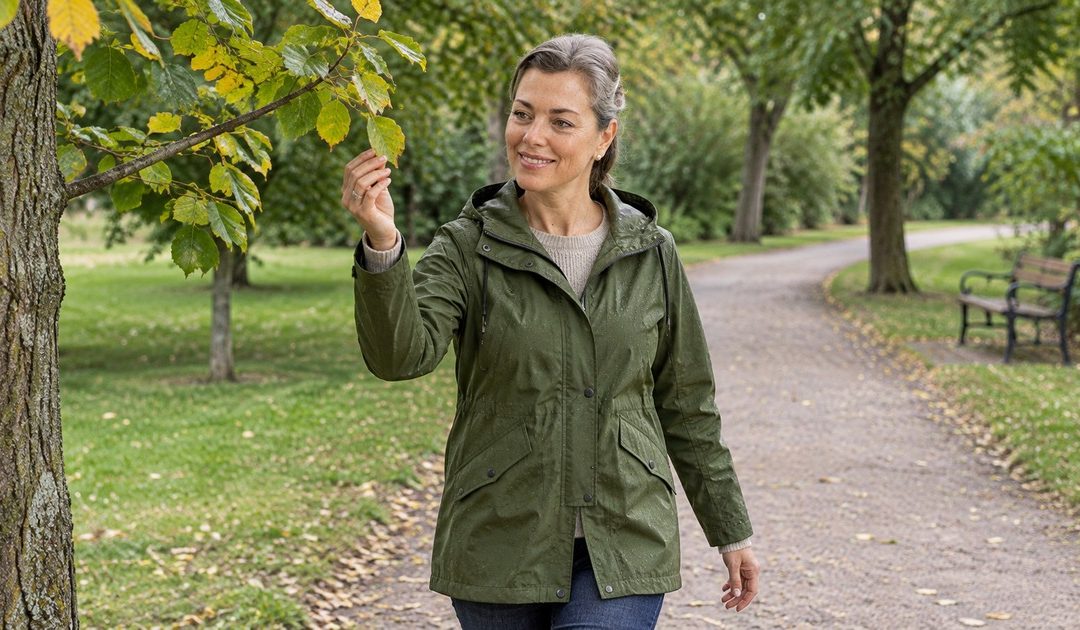
Mindfulness does not require sitting perfectly still. Walking, doing a simple household task or noticing your surroundings can offer a place to practice attention. The aim is to notice what is happening and gently return when your mind wanders, without demanding a particular feeling.
Choose an activity you can do comfortably
Start with an ordinary, low-risk activity that suits your mobility, senses and surroundings. You might notice your feet while walking on a familiar path, the movement of a cloth while wiping a table, or the changing sounds from an open doorway.
Keep enough attention on safety. Traffic, stairs, hot water, sharp tools and machinery need your normal practical awareness. A mindfulness exercise should not compete with the task of keeping yourself or others safe.
Try a short walking practice
- Choose a familiar, suitable place where you can walk without rushing.
- Notice one ordinary sensation: the contact of a foot with the ground, the movement of your arms or the air on your skin.
- When a thought draws your attention away, acknowledge it and return to the sensation.
- Finish when you choose. You do not need to reach a special state.
If walking is not comfortable or accessible, adapt the exercise to another movement or an external point of attention. The useful practice is returning, not completing a prescribed distance.
Use a simple household task
During a familiar task, notice a few details you usually overlook: the texture of a towel, the sound of running water or the shape of an item you are putting away. Let the task remain simple instead of adding a long mental checklist.
You might notice that you are planning dinner while folding a shirt. That is an opportunity to return to the shirt, not evidence that you failed. There is no need to narrate every movement or make all chores into a practice.
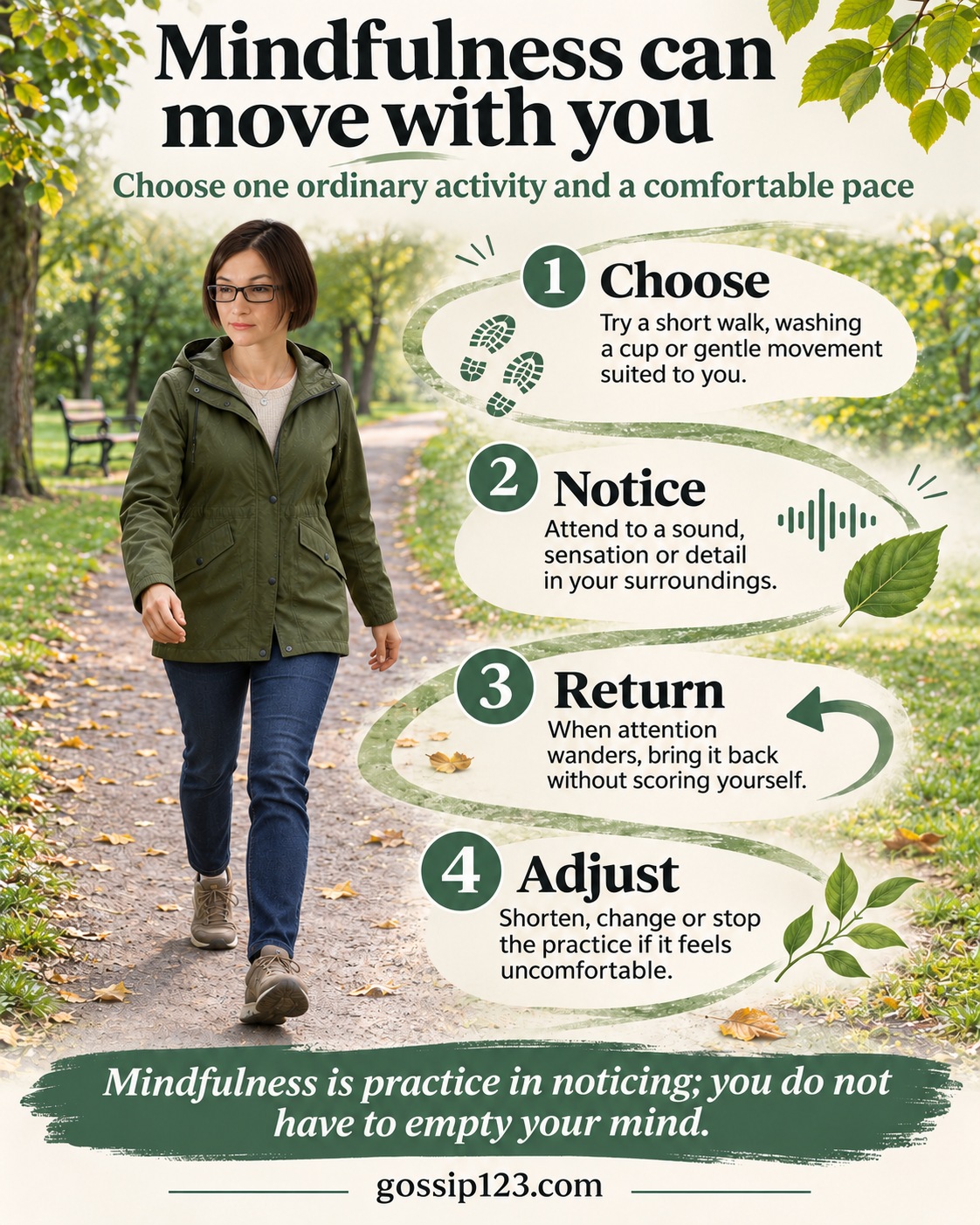
Read the visual guide as text
- Choose. Try a short walk, washing a cup or gentle movement suited to you.
- Notice. Attend to a sound, sensation or detail in your surroundings.
- Return. When attention wanders, bring it back without scoring yourself.
- Adjust. Shorten, change or stop the practice if it feels uncomfortable.
Mindfulness is practice in noticing; you do not have to empty your mind.
Listen or look when body-focused attention is uncomfortable
Some people prefer an external focus. Notice a nearby sound and a more distant one, or look at the color and edges of an ordinary object. You can keep your eyes open and change the focus if an exercise becomes uncomfortable.
There is no requirement to control your breathing, scan your body or remain with a difficult sensation. The NHS mindfulness overview describes paying attention to present experience, including everyday activities.
Place a pause between two tasks
Before opening the next email or beginning another household job, pause briefly. Notice where you are and choose the next action. This can be as simple as putting one item down before picking another up.
A pause is not a promise of calm or greater productivity. It gives you a chance to notice whether you need food, rest, a clearer priority or practical help. Sometimes the appropriate next step is changing the workload rather than changing your attention.
Keep expectations realistic
Research on meditation and mindfulness varies by practice and outcome. They do not work the same way for everyone, and some people experience unwanted effects. The NCCIH guide to effectiveness and safety explains these limits.
Stop or adapt a practice that increases distress, dizziness, agitation or a sense of disconnection. Ask a qualified professional for advice if symptoms persist or interfere with life. Do not replace prescribed treatment with a mindfulness routine.
Restlessness can have many causes, including discomfort, stress or an environment that does not suit you. It is not a spiritual failure. Choose one manageable activity, notice what it is like and leave room to decide that another approach fits better.