

Regret can bring a difficult question back again and again: “What if I had chosen differently?” You may wish you had acted, spoken, waited or known something sooner. The feeling does not mean that you can now reconstruct the past or judge every decision with perfect hindsight.
A more workable aim than a regret-free life is to understand what matters, make an appropriate repair where possible and choose how to respond now. These five approaches offer places to begin, without requiring you to feel better immediately.
On this page

1. Describe what you regret fairly
Name the event and the part that troubles you. “I didn’t ask a question before accepting the job” is more precise than “I ruin every opportunity.” Separate what happened from the broad judgement you are making about yourself.
Then consider what you knew at the time, what options were available and what pressures you faced. An outcome can be painful even when a decision was understandable with the information you had.
Keep other people’s actions in view too. You are not responsible for preventing every harm someone else chose to cause. A fair account includes limits and circumstances as well as your own choices.
2. Turn a what-if into a useful lesson
Psychologists use “counterfactual thinking” for imagining alternatives to past events. Epstude and Roese’s review considers how those thoughts can relate to intentions and behaviour. That does not mean imagining an ideal past guarantees happiness or removes regret.
Try moving from “If only I had asked” to a future-facing question: “What information will I ask for before a similar decision?” Write down one specific answer rather than building a perfect alternative life in your head.
If the reflection is circling without producing anything useful, you can pause. The exercise is an option, not an obligation to keep replaying the event until it stops hurting.
3. Consider a repair that respects others
If you caused harm, there may be something appropriate to acknowledge or put right. A useful apology names your action and its impact without demanding reassurance, forgiveness or immediate contact.
Ask whether the repair serves the person affected. Returning something you owe or changing a repeated behaviour may matter more than explaining how guilty you feel. Respect a request for space or no contact.
Some losses cannot be repaired in that way. You may need to grieve an opportunity, accept an unanswered question or discuss the experience with someone you trust. Those responses do not erase the event or make it acceptable.
4. Choose a manageable next action
Look for a step connected to what you learned. You could request information, practise a conversation, make a different arrangement or explore an opportunity that is available now.
Weigh the likely costs and risks rather than taking a leap simply to avoid future regret. Declining a challenge can be a considered choice. Courage does not require ignoring your safety, responsibilities or resources.
You might say, “I can’t change that decision, but I can spend twenty minutes finding out what this option involves.” The result may still be uncertain; the action gives you something real to assess.
5. Make room for life alongside regret
Ordinary care and enjoyment can coexist with an unresolved feeling. A walk, a meal with someone you like or a familiar activity need not make you cheerful to deserve a place in the day.
You do not have to find a hidden blessing in what happened or treat continuing sadness as a failure to let go. Notice when reflection helps and when you need company, rest or a break from the subject.
If regret is repeatedly disrupting sleep, daily activities or your sense of safety, consider speaking with a qualified mental health professional. You can seek support while still deciding what the experience means to you.
Read the infographic in text
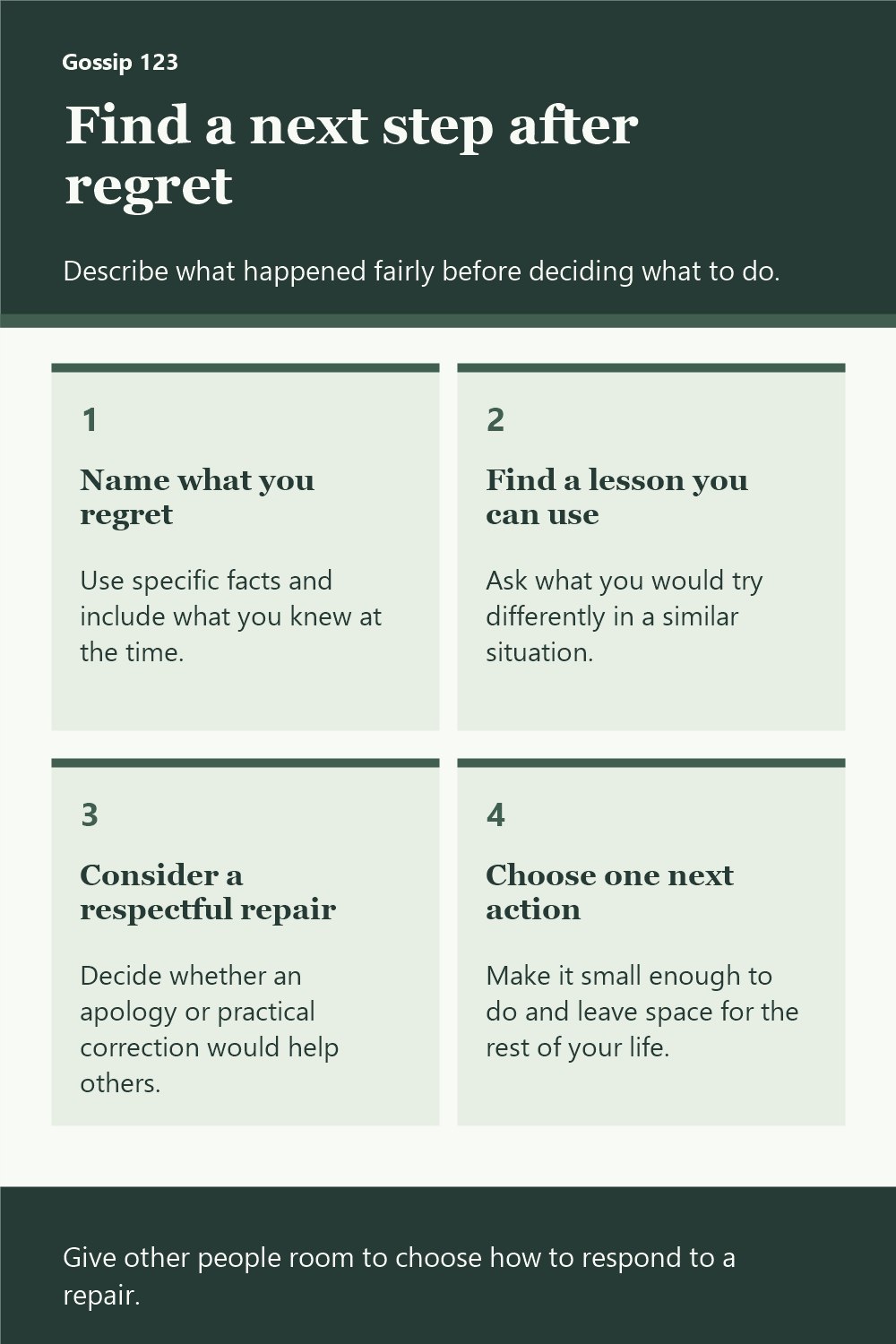
Find a next step after regret Describe what happened fairly before deciding what to do.
- Name what you regret Use specific facts and include what you knew at the time.
- Find a lesson you can use Ask what you would try differently in a similar situation.
- Consider a respectful repair Decide whether an apology or practical correction would help others.
- Choose one next action Make it small enough to do and leave space for the rest of your life.
Give other people room to choose how to respond to a repair.