

When meditation feels uncomfortable, you can pause, change the setting or stop for the day. Start with what you notice in your body and surroundings, then choose a response that feels manageable.
Start by noticing what felt uncomfortable
Meditation can bring up restlessness, physical discomfort, anxiety, memories or a sense of being overwhelmed. The National Center for Complementary and Integrative Health’s guide to meditation safety notes that unwanted experiences can occur and that available safety research has limits.
Ask what you noticed before interpreting it. Was sitting physically uncomfortable? Did a recording ask you to breathe in a way you disliked? Did focusing on bodily sensations make it harder to stay with the room around you? A plain description can make your next choice clearer.
Pause before deciding to continue
Stop the audio, open your eyes if that feels comfortable and notice a familiar object or sound. Change position or stand up if it feels safe. You can leave the session there and do something familiar, such as getting water or speaking with someone you trust.
If you’re in a class, tell the instructor you need a pause or ask where you can step out. You can choose how much to share. If you’re practicing alone, try putting the recording away for today and noticing how you feel during your usual activities.
Choose an adjustment you can test
If you want to try again, change one detail at a time. You could sit on a supportive chair, keep your eyes open, shorten the session or put your attention on an ordinary external sound. Movement may suit you better on some days. The NHS introduction to mindfulness gives examples that include everyday awareness and walking.
Suppose focusing on the breath makes you feel increasingly anxious. Stop. If you decide to return on a different day, try looking at daylight on a wall for a brief moment and see how that feels. You can choose another activity if that focus also feels unsettling.
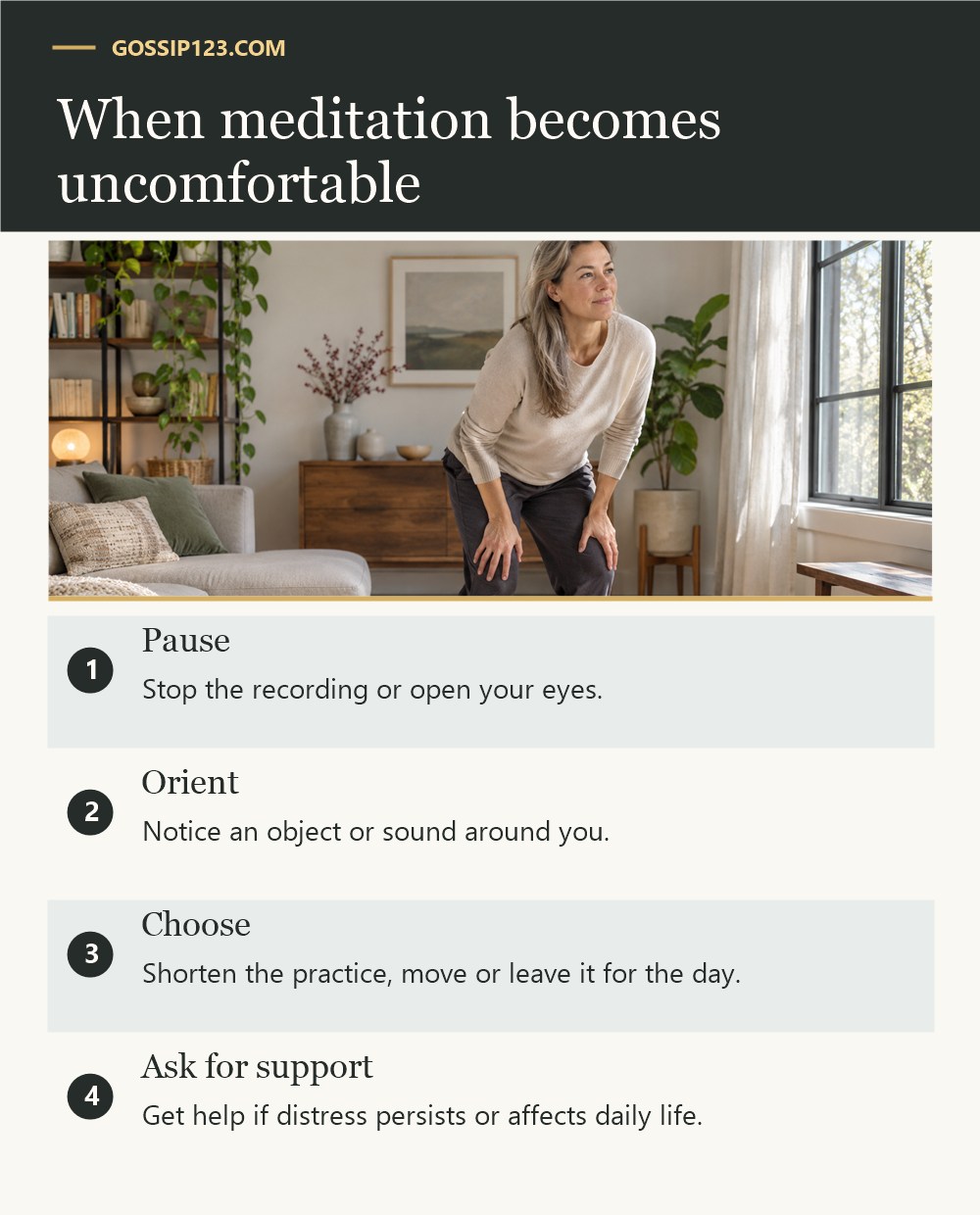
Read the visual guide as text
- Pause. Stop the recording or open your eyes.
- Orient. Notice an object or sound around you.
- Choose. Shorten the practice, move or leave it for the day.
- Ask for support. Get help if distress persists or affects daily life.
Ask an instructor how they handle discomfort
Before an intensive session or course, ask what options people have if they feel distressed. “Can I keep my eyes open, skip an exercise or leave without explaining?” gives you a practical question. A clear answer can help you decide whether the setting fits.
Some people give meditation experiences a spiritual meaning. You can decide how you interpret yours and keep your freedom to pause. If someone tells you to keep paying for sessions or pressures you to continue through significant distress, you can leave the arrangement.
Choose another form of support when you need it
Write a brief note if it will help you communicate. Include what you tried, what you noticed and whether it continued afterward. If distress persists, interferes with sleep or daily life, or concerns you for any reason, you can talk with a qualified health professional. Use urgent or emergency help if you might be in immediate danger.
A conversation, a familiar activity, rest or time outside can belong in your day even if you set the meditation aside. Decide whether you ever want to return and, if you do, choose a setting and duration that you can leave freely.
Related reading. Mindfulness for Beginners Who Find Sitting Still Difficult.
Frequently asked questions
1. Can I stop in the middle of a meditation?
Yes. Open your eyes if comfortable, turn off the recording and give yourself time to orient to the room.
2. What if focusing on breathing makes me more anxious?
You can use an external focus such as a nearby sound or object, try a shorter practice, or choose another activity altogether.
3. Should I try a longer session to get used to discomfort?
Choose a level of practice you freely want to try. If discomfort escalates, pause or stop and consider discussing the experience with a qualified professional.
4. What should I tell a meditation instructor?
Describe the practice and what you noticed. Ask whether you can keep your eyes open, use a different focus, skip an exercise or leave at any time.
5. When should I ask a health professional for help?
Ask for support if distress keeps returning, disrupts daily life or brings up symptoms that concern you. Seek urgent help if you may be in immediate danger.