

Wanting more closeness with a partner can bring up questions about attraction, timing and how to express interest. There is no reliable technique that makes another person want intimacy. A better starting point is a conversation that protects both people’s comfort and choices.
For adults in a relationship, these ten steps offer ways to discuss desire without pressure, assumptions or a promise of a particular response.
In this guide
- Start with mutual interest
- Choose comfort and privacy together
- Ask about preferences without stereotypes
- Agree before physical contact
- Accept a no or a change of mind
- Make room for your own preferences
- Keep invitations free of pressure
- Separate physical response from consent
- Talk about different levels of desire
- Seek health support when it is wanted
1. Start with mutual interest
You can express attraction without making the other person responsible for returning it. Try a simple invitation: “I would like some time together this evening. How are you feeling?” Give them room to answer honestly.
The goal is to understand whether you both want closeness now. An invitation can lead to a conversation, a different plan or no physical intimacy. None of those answers makes either person a failure.
2. Choose comfort and privacy together
Ask what would make the setting comfortable: fewer interruptions, a quieter room, more time or postponing until another day. Do not assume that particular clothes, a surprise or a romantic setting will create desire.
Make plans that either person can change. Privacy should support choice, not make leaving difficult. Avoid using alcohol to lower someone’s resistance; being relaxed is different from being able to make a clear, voluntary decision.
3. Ask about preferences without stereotypes
Being a man does not tell you what someone enjoys, how often they want intimacy or how they like to be approached. Ask the person rather than relying on a rule about gender.
You might discuss what feels affectionate, what they would rather avoid and how they prefer to say that they are interested. Listen without turning the answer into a permanent instruction. Preferences can change, and a previous preference does not replace checking now.
4. Agree before physical contact
A relationship, a date or previous intimacy does not provide continuing permission for every kind of touch. Ask clearly enough for both people to understand what is being suggested.
A simple “Would you like a kiss?” leaves more room for an answer than moving ahead and waiting for resistance. If the response is uncertain, pause. You do not need to keep escalating a situation to discover where someone’s limit is.
5. Accept a no or a change of mind
Someone can decline, stop or change their mind after initially agreeing. Respond without bargaining, repeated requests, sulking or making affection conditional on changing the answer.
You can feel disappointed and still respect the decision. Say, “Okay, we can stop,” and give space if it is wanted. A person should not have to manage your reaction before feeling able to state a boundary.
6. Make room for your own preferences
Your comfort matters too. You do not have to dress, perform or agree to something that you do not want in order to keep another person interested.
Name your own limits directly: “I enjoy spending time with you, but I do not want that.” You can suggest another activity if you genuinely want to; you do not owe a replacement. For everyday agreements about contact and time together, read about closeness and space in a relationship.
7. Keep invitations free of pressure
Gifts, compliments, favours and planned evenings do not create a debt of intimacy. Offer them because you want to, without attaching an unspoken requirement.
Similarly, avoid testing desire through jealousy, withdrawal or promises of a reward. If saying no leads to punishment, threats or persistent pressure, the concern is the behaviour. The guide to recognising emotional manipulation discusses choices and private support when ordinary conversation is not enough.
8. Separate physical response from consent
A physical response does not establish that someone wants an activity to continue. Silence, freezing or pulling away also calls for stopping and checking, rather than treating the absence of a spoken refusal as agreement.
RAINN’s guide to consent explains that consent is voluntary and ongoing, and that bodily arousal is not consent. When you are unsure, stop. A respectful check-in gives the person time and a real choice.
9. Talk about different levels of desire
If you want intimacy at different times or frequencies, choose a calm moment to talk away from an immediate invitation. Describe your experience without diagnosing the other person or treating the difference as proof that they do not love you.
Ask what kinds of closeness each of you wants and what agreements feel workable. A conversation may clarify a difference without resolving it. Neither person should agree to unwanted intimacy to meet a target. You can consider support or reconsider whether the relationship suits you.
10. Seek health support when it is wanted
A change in desire can have several explanations. The NHS guidance on low sex drive lists possible factors including stress, relationship difficulties, some medicines and health conditions, and suggests speaking to a GP if you are worried.
The person experiencing the change can decide whether to seek advice. Offer support without insisting that they need to be fixed. If medication may be involved, discuss it with a clinician rather than stopping or changing it yourself.
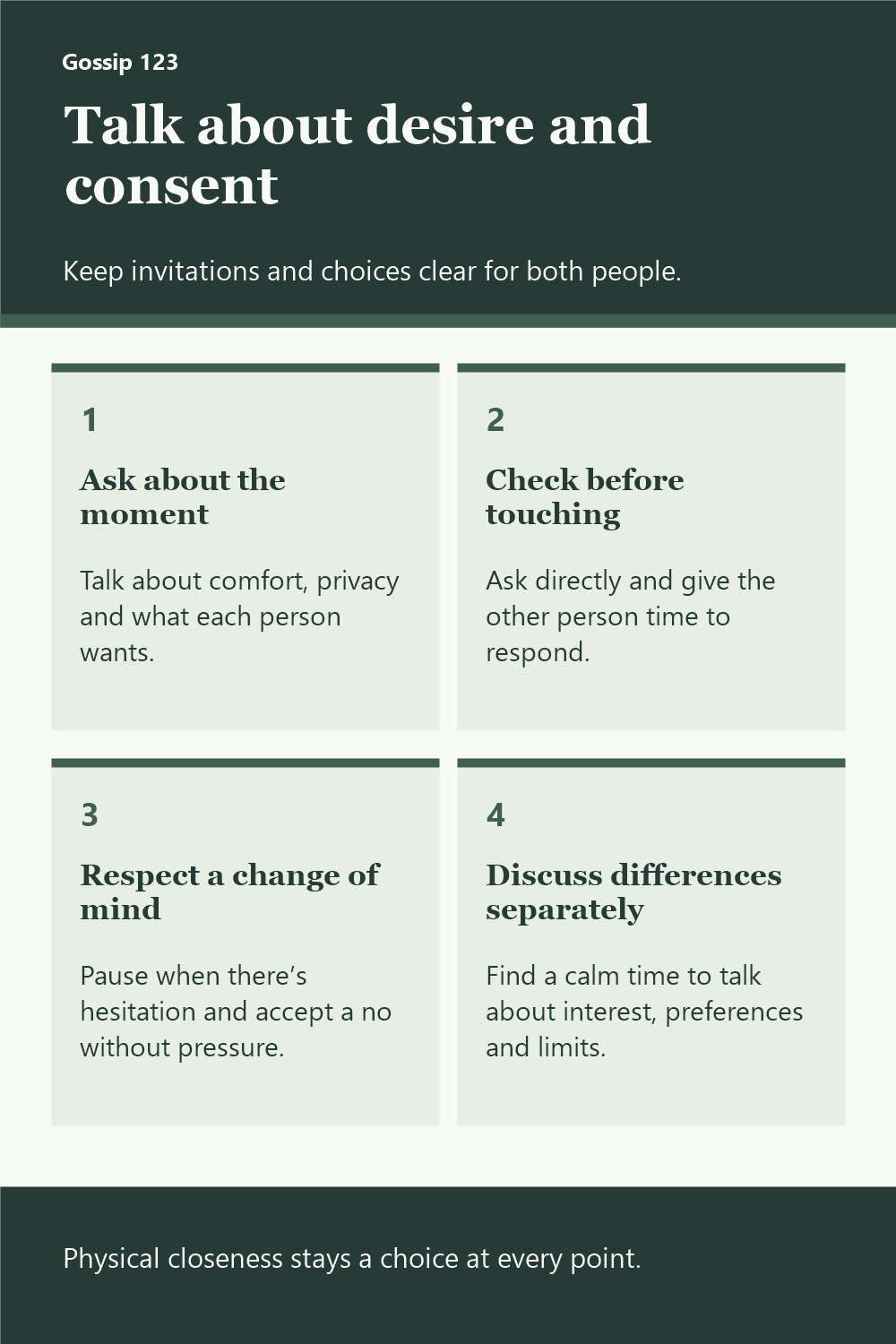
Read the infographic in text
Talk about desire and consent Keep invitations and choices clear for both people.
- Ask about the moment Talk about comfort, privacy and what each person wants.
- Check before touching Ask directly and give the other person time to respond.
- Respect a change of mind Pause when there’s hesitation and accept a no without pressure.
- Discuss differences separately Find a calm time to talk about interest, preferences and limits.
Physical closeness stays a choice at every point.