

A child who is angry may shout, withdraw, cry or struggle to explain what happened. The feeling itself is not misbehaviour. Your job is to help keep the situation safe, understand what the child needs and teach ways to respond without hurting people.
There is no single calming activity that works for every child. Age, communication, sensory needs and the situation all matter. Start with a manageable response, then practise skills at a quieter time rather than expecting a long explanation in the middle of an outburst.
On this page
Keep the moment safe
Use a steady voice and a few clear words. If other children are nearby, help them move to a safe distance. Reduce noise or an audience where possible. Avoid crowding the child, arguing about every detail or demanding eye contact.
A short statement can combine care and a limit: “I can see you’re very upset. I won’t let anyone be hit. Let’s make some space.” Offer a quieter place with support available, rather than treating isolation as punishment for having a feeling.
Manage your own response too. If another trusted adult can safely take over, a brief pause may help you avoid shouting. If there is an immediate risk of serious harm that you cannot safely manage, get urgent local help. Do not turn an online calming tip into a physical restraint technique.
Name feelings and set clear limits
Offer words without insisting that you know exactly what the child feels: “Are you angry because the game ended, or is something else bothering you?” A younger child may point, draw or choose between simple descriptions. An older child may want time before talking.
Acknowledge the experience while keeping the limit: “You wanted another turn. It’s disappointing to stop. Throwing the controller could hurt someone, so we’re putting it down.” Accepting anger does not mean allowing harm or granting every request.
Avoid labels such as bad, dramatic or impossible. Do not compare the child’s reaction with a sibling’s or threaten to give them something to cry about. Focus on the action you need to stop and the help you can offer now.
Practise options when calm
Choose one or two ideas together outside the difficult moment. The NHS guide to helping children with anger suggests noticing early warning signs and finding strategies with the child. Adapt any suggestion to their age and needs.
You could practise:
- A phrase such as “I need help” or a simple signal for taking a break.
- Moving to a quieter space, with a trusted adult nearby if needed.
- Drawing, stretching or a short walk when the surroundings are safe.
- Taking slower breaths, if the child finds that comfortable, rather than requiring it.
- Using a written or pictured plan for a transition that is often difficult.
Let the child say which options feel useful. A journal can be offered, but writing should not become compulsory proof that they have calmed down. Explain what privacy they can expect and when safety concerns would require adult help.
Notice the attempt rather than promising that a technique will remove anger: “You asked for a break before throwing anything. That gave us time to work out what to do.”
Understand the situation and repair harm
When everyone is calmer, ask a small, open question: “What was happening just before things got difficult?” Listen for practical factors such as hunger, tiredness, a confusing instruction, a noisy room, conflict or feeling excluded. Do not assume every angry response hides the same emotion.
Look for a change you can make together. A warning before leaving, fewer instructions at once or help asking for a turn may be more useful than another lecture about attitude. Share relevant observations with school or another caregiver while protecting the child’s dignity.
If someone was hurt or something was damaged, include repair. That might mean checking whether the person needs help, putting things right or practising different words. Avoid forcing an immediate apology while the child is still overwhelmed. Adults can model repair too: “I shouted. That wasn’t helpful. I’m going to try again more calmly.”
Ask for support when needed
Seek advice if anger frequently leads to harm, seriously disrupts home or school, or leaves you worried about how to keep people safe. A GP, paediatric clinician, school support professional or qualified child mental-health professional can help assess what is happening.
Bring concrete examples: what happened beforehand, what the child did, how long the difficulty lasted and what seemed to help. These observations are more useful than deciding that a child is simply an angry person.
Learning takes practice and adult support. You can hold clear limits, listen respectfully and adjust the plan without expecting a child to manage every strong feeling alone.
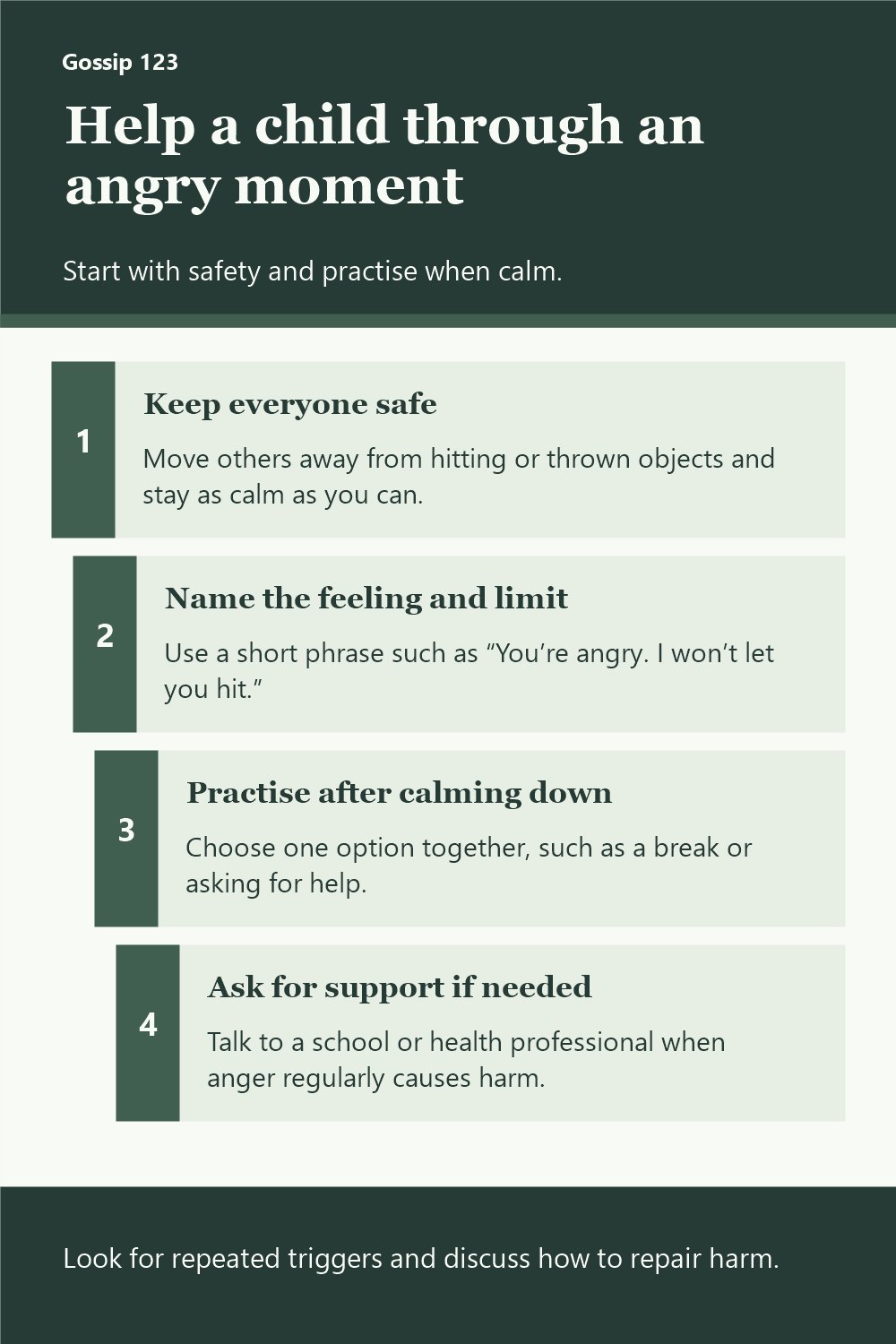
Read the infographic in text
Help a child through an angry moment Start with safety and practise when calm.
- Keep everyone safe Move others away from hitting or thrown objects and stay as calm as you can.
- Name the feeling and limit Use a short phrase such as “You’re angry. I won’t let you hit.”
- Practise after calming down Choose one option together, such as a break or asking for help.
- Ask for support if needed Talk to a school or health professional when anger regularly causes harm.
Look for repeated triggers and discuss how to repair harm.