

Being considerate is not a flaw. Listening, offering help and making room for a partner’s preferences can be valuable parts of a relationship. Difficulties arise when being “nice” means hiding what you need, agreeing out of fear or trying to manage the other person’s feelings and decisions.
You do not have to become less caring to change that pattern. Start with one situation where your answer does not reflect what you want or can manage. The aim is a relationship in which both people can be honest, make choices and expect respect.
On this page
Separate kindness from automatic agreement
Think of a recent example. Perhaps you accepted a visit when you needed rest, paid for something you could not afford or said a decision was fine when you wanted to discuss it. Ask yourself: did I freely choose this, or did saying no feel unavailable?
An occasional compromise is different from repeatedly giving up your own needs. Look at the pattern rather than counting who has done more favours. Can both of you change plans, ask for help and decline requests? Do you have room to think before answering? If you are unsure what you want, a pause is a useful first answer: “Let me check what I can manage and get back to you this evening.”
If you agreed and later realised it was too much, you can revisit the arrangement. Changing your answer may require a practical adjustment or an apology for short notice. It does not mean your original limit has disappeared.
Describe a limit you can keep
Make the issue specific enough to act on. “I need more respect” may describe how you feel, but “Please ask before inviting people to stay at our home” gives you something concrete to discuss. You can explain a preference without presenting a case for why you deserve it.
Try a sentence with the request, your capacity and an available alternative, if you want to offer one: “I can’t drive you tomorrow morning. I can help you look at transport options tonight.” An alternative is optional; you do not need to create extra work every time you decline.
A boundary describes what you will do or participate in. It is different from ordering a partner to think or behave exactly as you would. For example: “I’m going to stop this conversation while we’re shouting. I can return to it after dinner if we can speak calmly.” Keep the plan realistic, and change it if the situation becomes unsafe.
Offer support with permission
Before giving advice, organising appointments or taking over a task, ask what kind of help the other person wants. “Would listening help, or do you want to work through options together?” leaves space for their answer. You can care about a decision and still recognise that it belongs to them.
Practical support can also be necessary and welcome. Disability, illness, caregiving and shared responsibilities may mean one person does more of a particular task. Equal respect does not require identical workloads. Talk about what each person needs, what is sustainable and whether outside help is available.
If you keep checking messages because you feel worried, consider an agreed check-in instead. Discuss expectations about availability. Caring about someone does not give either partner permission to monitor their location, demand passwords or inspect private conversations.
Allow room for different feelings
You can acknowledge disappointment without trying to remove it immediately. If your partner has had a difficult day, “That sounds exhausting; would you like to talk?” may be more welcome than a quick instruction to stay positive. Ask rather than assuming what will help.
Your feelings deserve the same space. You can say, “I want to support you, and I’m tired tonight. Could we talk for a little while and continue tomorrow?” The NHS advice on healthy relationships includes listening, honest conversations, boundaries and time for yourself. These are practices to work on together, not ways to guarantee someone else’s approval.
Notice the response and choose support
A respectful partner may need clarification or feel disappointed. Notice whether they also listen, take your answer seriously and work with you on arrangements. If the same issue returns, discuss the specific pattern and decide what you are willing to continue.
Threats, humiliation, financial control, sexual pressure or punishment for saying no call for more than a better script. You are not responsible for preventing another person’s abusive behaviour by being more agreeable. Seek private support from a trusted person or a local domestic abuse service if you feel afraid. You can consider your safety before confronting someone or changing arrangements.
Choose one manageable experiment where it feels safe: pause before answering, name a preference or ask what help is wanted. Afterwards, notice how it felt and how the other person responded. The purpose is to make your choices clearer while keeping care for yourself in the relationship too.
Read the infographic in text
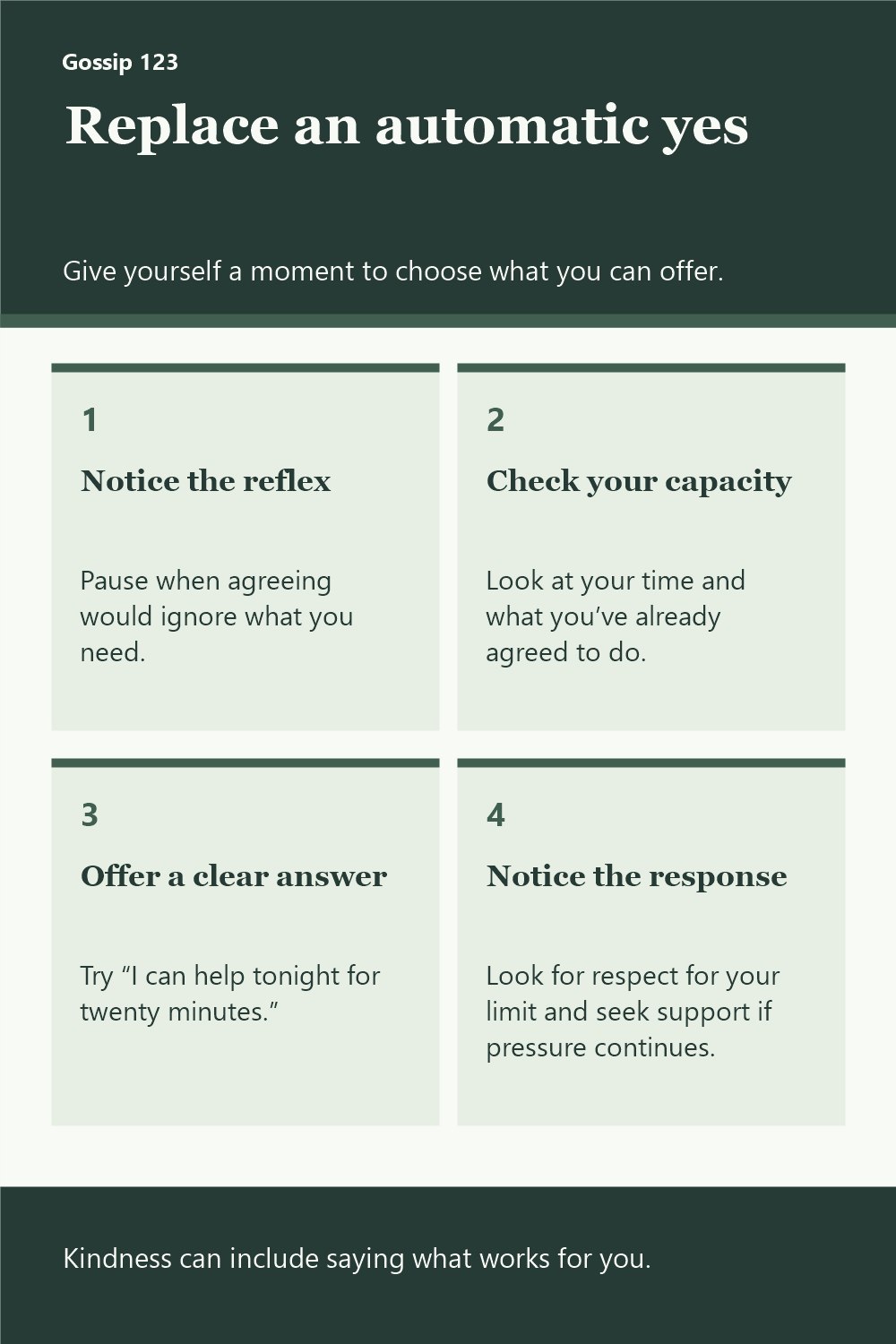
Replace an automatic yes Give yourself a moment to choose what you can offer.
- Notice the reflex Pause when agreeing would ignore what you need.
- Check your capacity Look at your time and what you’ve already agreed to do.
- Offer a clear answer Try “I can help tonight for twenty minutes.”
- Notice the response Look for respect for your limit and seek support if pressure continues.
Kindness can include saying what works for you.