

Self-care can be as ordinary as eating before a long afternoon, setting a limit on a favor or asking a friend for company. If you’re already stretched thin, start with the part of your day that feels hardest. One small change is enough to learn what helps.
On this page

What counts as self-care?

Self-care includes everyday habits that make it easier to meet your needs and ask for support. A friend told me she struggled to get into yoga and long baths. Hiking was the activity that helped her settle her mind. Her experience is a good reminder to choose something that suits your energy, time and access.
The five areas below overlap. A walk with a friend may support your body, give you company and help you make sense of a difficult day.
Mental care: give your attention a break
Your attention needs both stimulation and rest. You could read a few pages for pleasure, give a hobby ten minutes or put your phone away while you eat. If you’re carrying a long list in your head, write down the next thing you need to do and one task that can wait.
Physical care: start with what your body needs
Check basic needs first. Have you had water, something to eat or a chance to rest? Try stretching within a comfortable range, taking a short walk or setting a time to wind down for bed. Choose options that work with your body, budget and schedule.
Spiritual care: make space for what matters

Make time for a practice that connects you with something you value. That could be prayer, meditation, time in nature, a community gathering or a few quiet minutes remembering someone important to you. If you’re unsure where to start, think about which activities make you feel most present.
Social care: choose company that feels right
Choose a form of connection you have room for today. A quick voice note, a short walk with a friend or a recurring call can be easier to plan than a long outing. It’s also reasonable to turn down an invitation or ask to leave at a set time.
Emotional care: notice what you’re feeling
Try naming the feeling in ordinary language. “I feel disappointed about that conversation” gives you somewhere to start. You might want to write a few lines, talk with someone you trust or wait before replying to a difficult message. If distress is persistent or is making everyday life difficult, a qualified professional can help you consider the support you need.
Put one practice into your week
- Choose one area you want to tend to this week.
- Pick a small action and attach it to something you already do. After lunch, for example, step outside or send a check-in message.
- Decide how to make it easier on a hard day. Sitting by the window or texting a friend can take less effort.
Review what helped
At the end of the week, ask when the practice felt helpful and what got in the way. Keep the parts that fit, change what feels like another obligation and give yourself permission to ask for help with what is too much to carry alone. If you’d like to share what you tried, use the contact page.
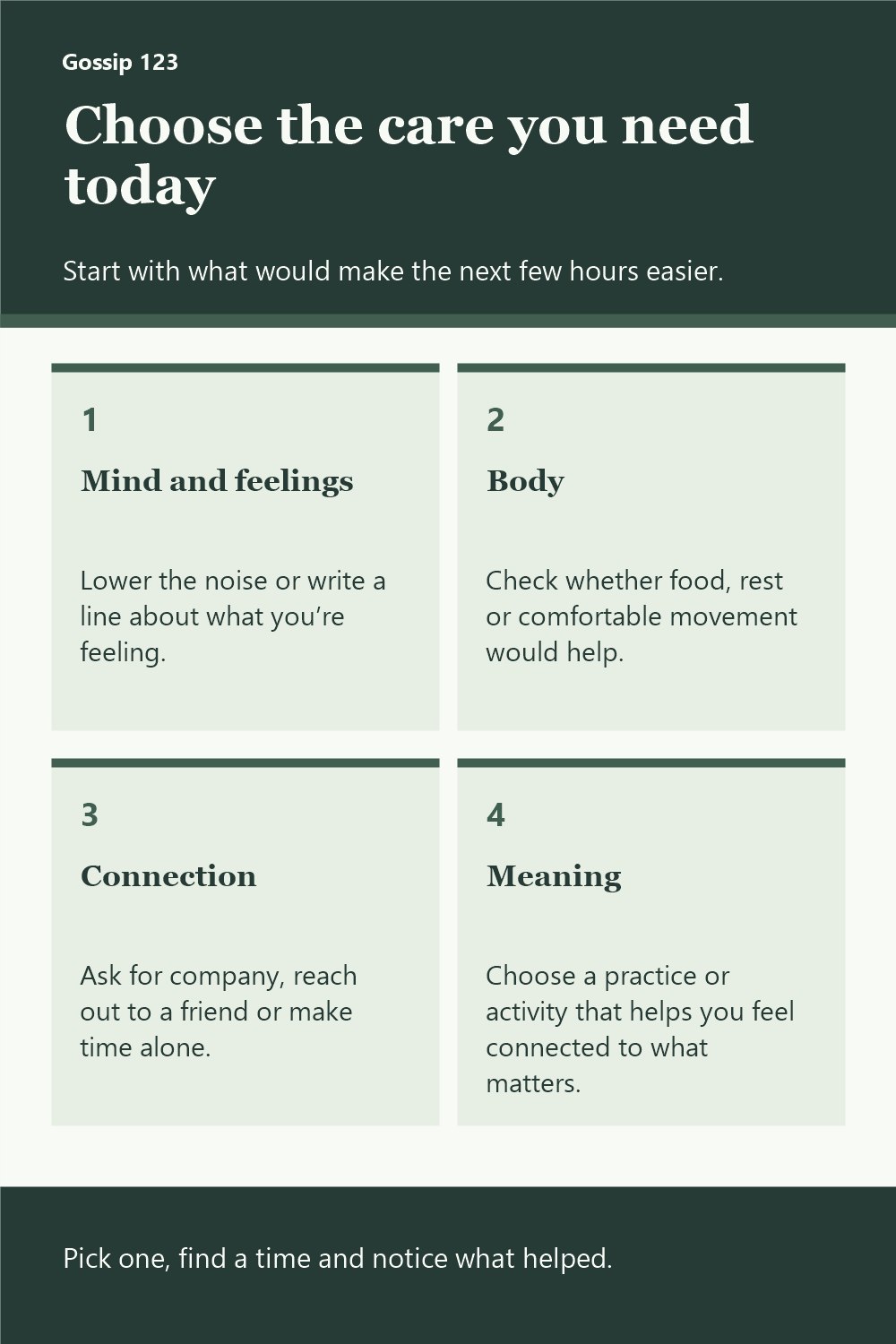
Read the infographic in text
Choose the care you need today Start with what would make the next few hours easier.
- Mind and feelings Lower the noise or write a line about what you’re feeling.
- Body Check whether food, rest or comfortable movement would help.
- Connection Ask for company, reach out to a friend or make time alone.
- Meaning Choose a practice or activity that helps you feel connected to what matters.
Pick one, find a time and notice what helped.