

Empathy starts with trying to understand what a situation feels like to someone else. A useful first step is to listen long enough to hear what matters to them, then check whether you understood.
Notice the difference between feeling and understanding
You may feel sad when a friend shares bad news. You can also understand that a coworker is disappointed even if you react differently. In either case, the person can tell you more about their experience than you can infer from your own reaction.
Reflect back what you heard
Try “It sounds like the last-minute change was the hardest part. Did I get that right?” Leave space for a correction. If you’re talking with a child, start with simple language and give them time to explain.
Ask whether they want help
“Would you like me to listen or help think through what to do?” keeps the choice with the person who’s dealing with the problem. If they ask for practical help, offer something specific that you have time to do.
Keep empathy and boundaries together
You can see why someone is upset and still disagree with what they want you to do. Say what you understand and what you can offer. “I know this deadline is stressful. I can review the first page this afternoon.”
Read the infographic in text
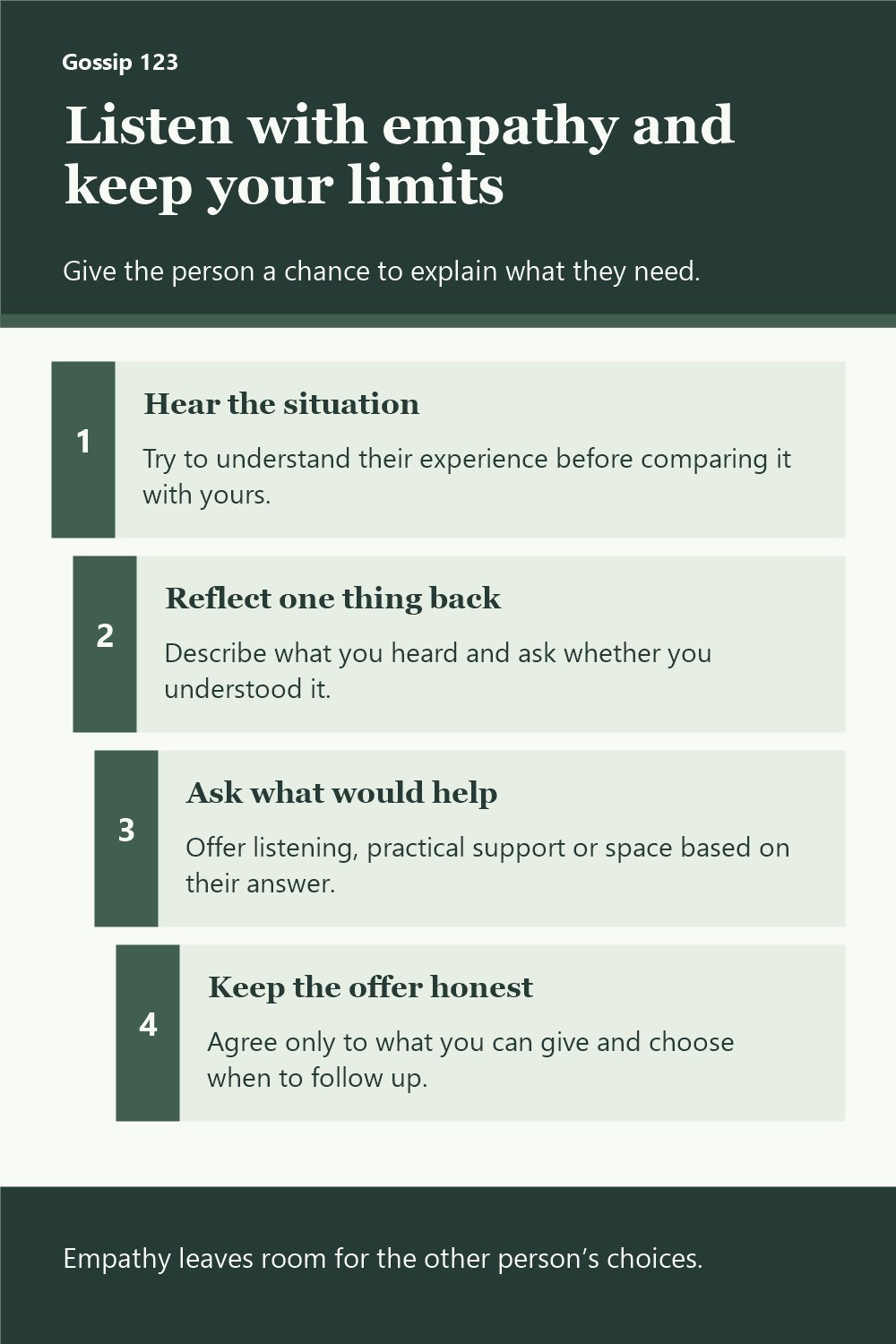
Listen with empathy and keep your limits Give the person a chance to explain what they need.
- Hear the situation Try to understand their experience before comparing it with yours.
- Reflect one thing back Describe what you heard and ask whether you understood it.
- Ask what would help Offer listening, practical support or space based on their answer.
- Keep the offer honest Agree only to what you can give and choose when to follow up.
Empathy leaves room for the other person’s choices.