

Hearing that someone spoke about you behind your back can hurt, especially if you trusted them. Before you respond, give yourself time to decide what you know and what you want to happen next.
On this page
- Give yourself time to respond
- Avoid spreading the story yourself
- Find out what was actually said
- Look at whether it’s a pattern
- Listen before you decide
- Say what you want to change
- Protect private information
- Correct a claim where it matters
- Choose how much contact you want
- Ask for support if the situation escalates
- Decide what would help you move forward
Give yourself time to respond
You can put your phone down or wait until the end of the day before replying. Choose a time when you can think about what you want to say.
Avoid spreading the story yourself
Share it only with people who can help. Repeating the details to a wider group can make the situation harder to sort out.
Find out what was actually said
Distinguish between hearing a comment firsthand and hearing someone else’s account. Ask for the exact words if the distinction matters.
Look at whether it’s a pattern
A careless comment and repeated sharing of private information call for different responses. Decide whether you need a conversation or a clearer limit.
Listen before you decide
If it’s safe and useful, ask about one specific event. Leave room for an explanation or a misunderstanding.
Say what you want to change
Try “I heard that my plans were discussed with other people. I’d like you to ask me before sharing them next time.”
Protect private information
Until you know how the person handles private details, share only what you’re comfortable having repeated.
Correct a claim where it matters
If an inaccurate story affects work, family or a decision someone is making, give the relevant person a short factual correction.
Choose how much contact you want
You may decide to remain polite and spend less time with the person. Use boundaries you can keep even if you share a workplace or friend group.
Ask for support if the situation escalates
If there’s repeated harassment or a serious effect on your work, keep a record of what happened and speak to someone in a position to help.
Decide what would help you move forward
Pick one next step. It might be a conversation, a correction or putting your time into relationships where your privacy is respected.
Read the infographic in text
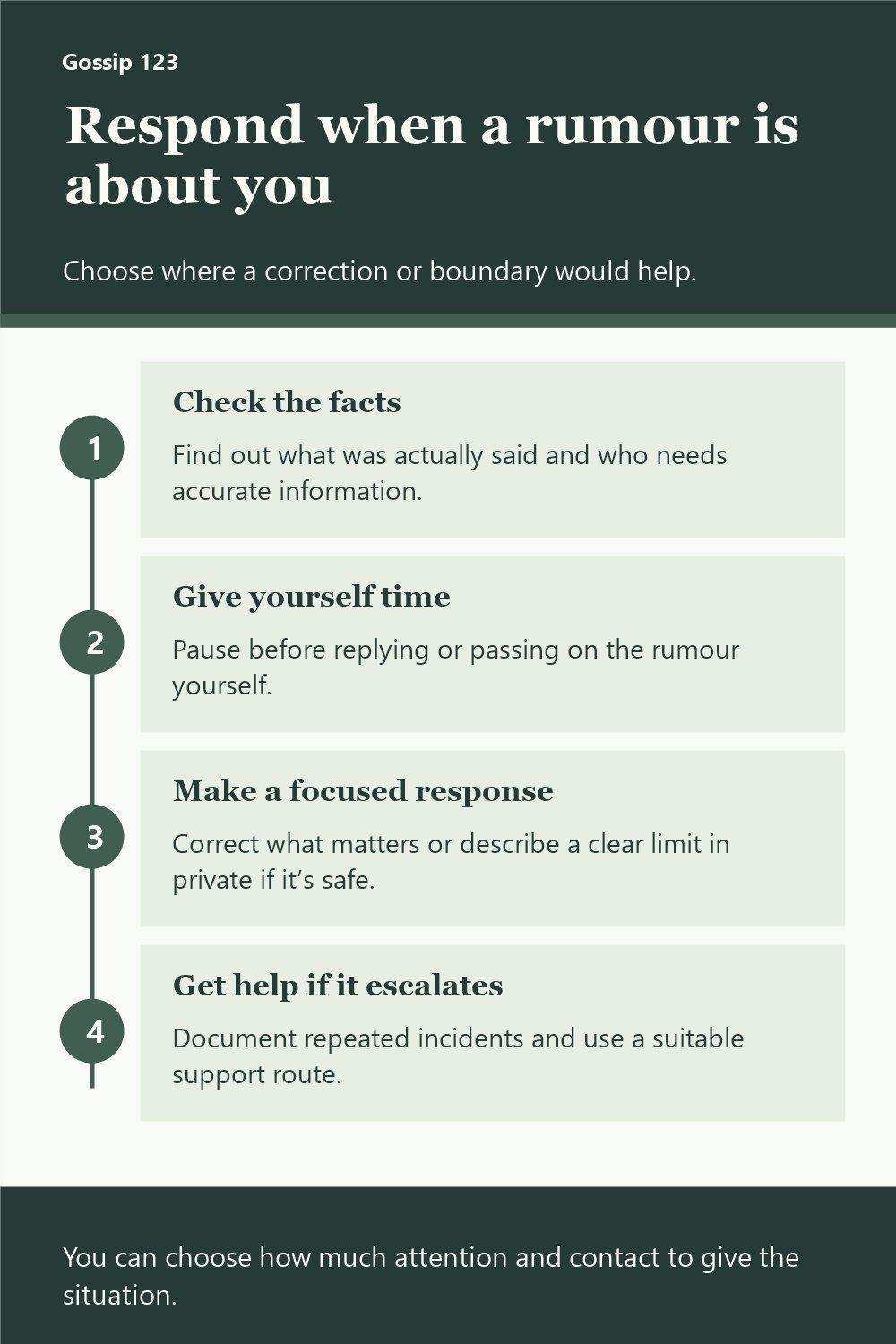
Respond when a rumour is about you Choose where a correction or boundary would help.
- Check the facts Find out what was actually said and who needs accurate information.
- Give yourself time Pause before replying or passing on the rumour yourself.
- Make a focused response Correct what matters or describe a clear limit in private if it’s safe.
- Get help if it escalates Document repeated incidents and use a suitable support route.
You can choose how much attention and contact to give the situation.