

A coworker starts telling you why someone is off sick, or a team chat turns into guesses about who might be let go. You can stay friendly while deciding which conversations you’ll take part in. A short reply usually works better than a speech.
Redirect the conversation
Try “I don’t know what happened, but I can help cover the Friday shift” or “I’d rather leave that to her to share.” In a group chat, you can skip the rumour and answer the work question. If someone is trying to solve an actual work problem, offer to talk directly with the person who can help.
Keep private information where it belongs
If someone tells you something about their health, plans or family, let them decide whom to tell. If you already repeated it, stop passing it on and tell the person what you shared, where appropriate. If you spread a claim that turned out to be wrong, correct it with the people you told.
Use a reporting channel for a serious concern
Bullying, harassment, discrimination and safety concerns can need a direct response. Use your organisation’s reporting process, and record dates, exact words or messages you saw and any witnesses. If your usual contact is involved, check the policy for another channel.
For related advice, see what to do if you’re the subject of a rumour and how to change the course of a conversation.
Read the infographic in text
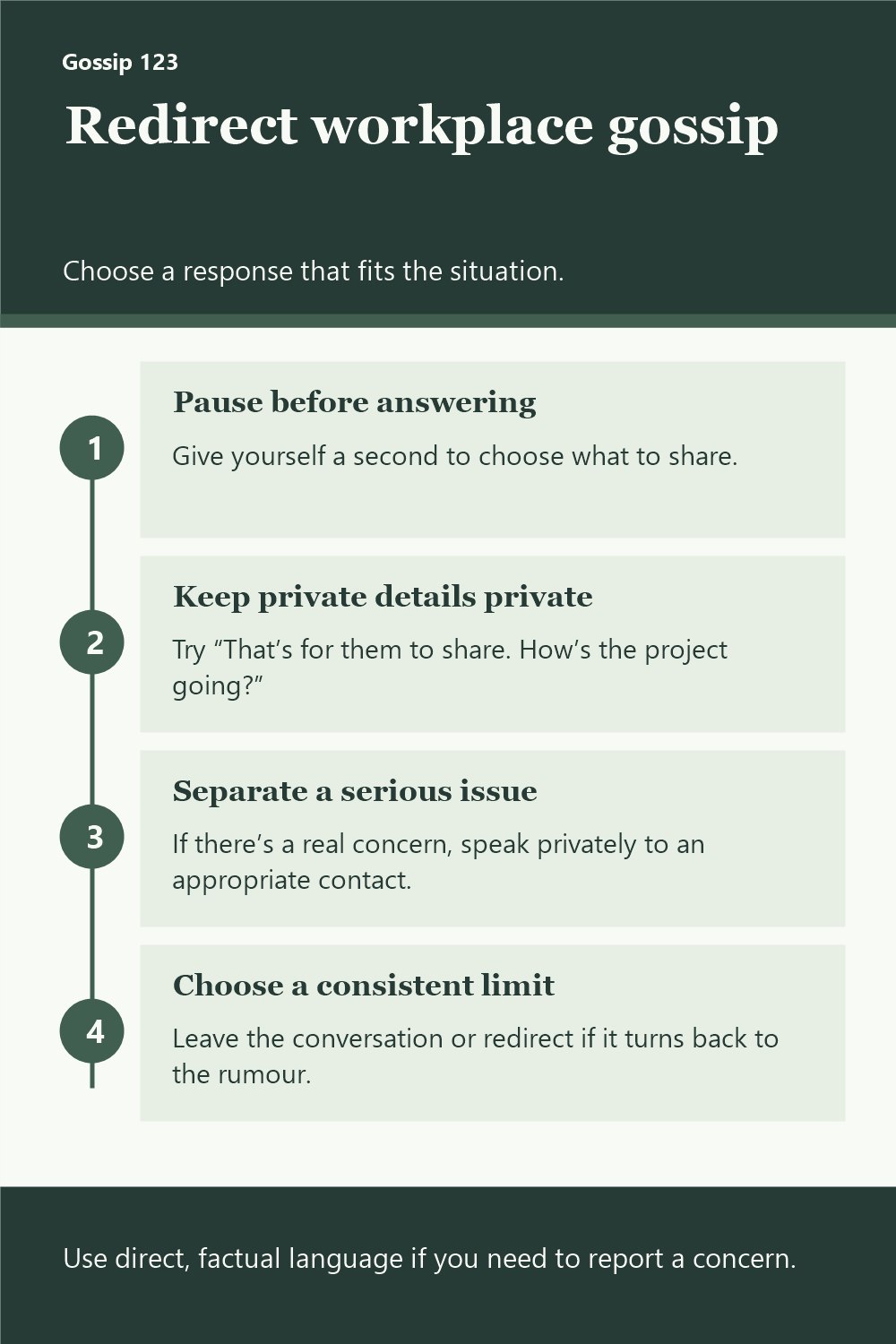
Redirect workplace gossip Choose a response that fits the situation.
- Pause before answering Give yourself a second to choose what to share.
- Keep private details private Try “That’s for them to share. How’s the project going?”
- Separate a serious issue If there’s a real concern, speak privately to an appropriate contact.
- Choose a consistent limit Leave the conversation or redirect if it turns back to the rumour.
Use direct, factual language if you need to report a concern.