

Hearing gossip can leave you curious, uncomfortable or unsure what to say. You may worry about someone’s privacy while also wanting to support the person speaking. Those concerns need more thought than a rule that listening is always wrong.
You cannot control everything you overhear. You can consider what you do with the information, how you respond and whether someone needs help.
In this guide
- Separate what you heard from what you know
- Recognise that hearing is not agreement
- Protect privacy while leaving room for support
- Set a boundary in ordinary words
- Let spiritual values guide a practical choice
- Support someone without taking over
- Repair what you chose to pass on
- Choose what the next conversation needs
1. Separate what you heard from what you know
A confident account can still be incomplete. Notice whether someone is describing an event they witnessed, repeating another person’s account or guessing what a message or behaviour means.
You can say, “I do not know enough to draw that conclusion.” Avoid adding motives or details to make the account feel complete. Even accurate information may be private; knowing that something happened does not automatically give everyone a reason to discuss it.
2. Recognise that hearing is not agreement
You may hear a rumour before realising where the conversation is going. You might also stay quiet because you are surprised, feel outnumbered or worry about the person’s reaction.
That does not establish that you approved of what was said. Focus on the choices available now: you can avoid repeating the story, decline to add an opinion or speak to someone privately later. A public confrontation is not the only way to respond.
3. Protect privacy while leaving room for support
Talking about a difficult experience can be necessary. A person describing mistreatment, asking for advice or reporting a safety concern should not be silenced by a rule against speaking negatively about anyone.
Ask what the conversation is for. “Would you like me to listen, help you consider options or find someone who can help?” keeps attention on the person’s needs. Share only the information needed with an appropriate listener. If you cannot promise complete confidentiality, say so rather than making an assurance you cannot keep.
4. Set a boundary in ordinary words
When a conversation is becoming speculation or entertainment at someone else’s expense, a brief response may be enough:
- “I would rather let them share their own news.”
- “I do not want to guess about their relationship.”
- “Can we talk about something else?”
You can change the subject, stop forwarding messages or leave a thread if that is available to you. A boundary describes your participation; it cannot guarantee that everyone else will stop. Consider your safety and the power dynamics before challenging someone.
5. Let spiritual values guide a practical choice
If faith or spiritual reflection matters to you, you might consider how compassion, honesty and care for others apply to this conversation. A quiet pause, prayer or reflection may help you decide what you want to say.
Hearing a story does not prove spiritual damage, and refusing to hear it cannot guarantee that others will protect you from gossip later. You can act on your values without treating another person’s distress as punishment or judging someone who needs support.
6. Support someone without taking over
Listen to what the person is asking for and check your understanding. You can acknowledge that an experience sounds painful without claiming to know every fact or deciding what they must do next.
The NHS guidance on healthy relationships suggests checking understanding and setting limits on what support you can offer. You might have time for one conversation or be able to help find an appropriate contact.
For a workplace concern, Acas offers UK guidance on bullying, including keeping a factual record and seeking help from an appropriate manager or union representative. Someone should not have to confront the person directly before being allowed to seek support.
7. Repair what you chose to pass on
If you repeated an unsupported claim, correct it with the people you told. Be clear that you did not know it was true, and ask them not to pass it on. Avoid turning the correction into a fresh telling of the story to a wider audience.
If you shared private information, acknowledge your own action where appropriate. Explain what you can do to limit further sharing, without promising to erase every copy or restore trust immediately. Give the person room to decide what they share with you in future.
8. Choose what the next conversation needs
Before continuing, ask who needs the information and what sharing it would help them do. You may decide to keep a detail private, offer practical help or pass a specific concern to someone equipped to respond.
If you are the subject of the story, you can seek support too. You do not need to disclose your whole private life to correct one inaccurate claim. The guide to gossip, privacy and repair includes options for responding when you are targeted.
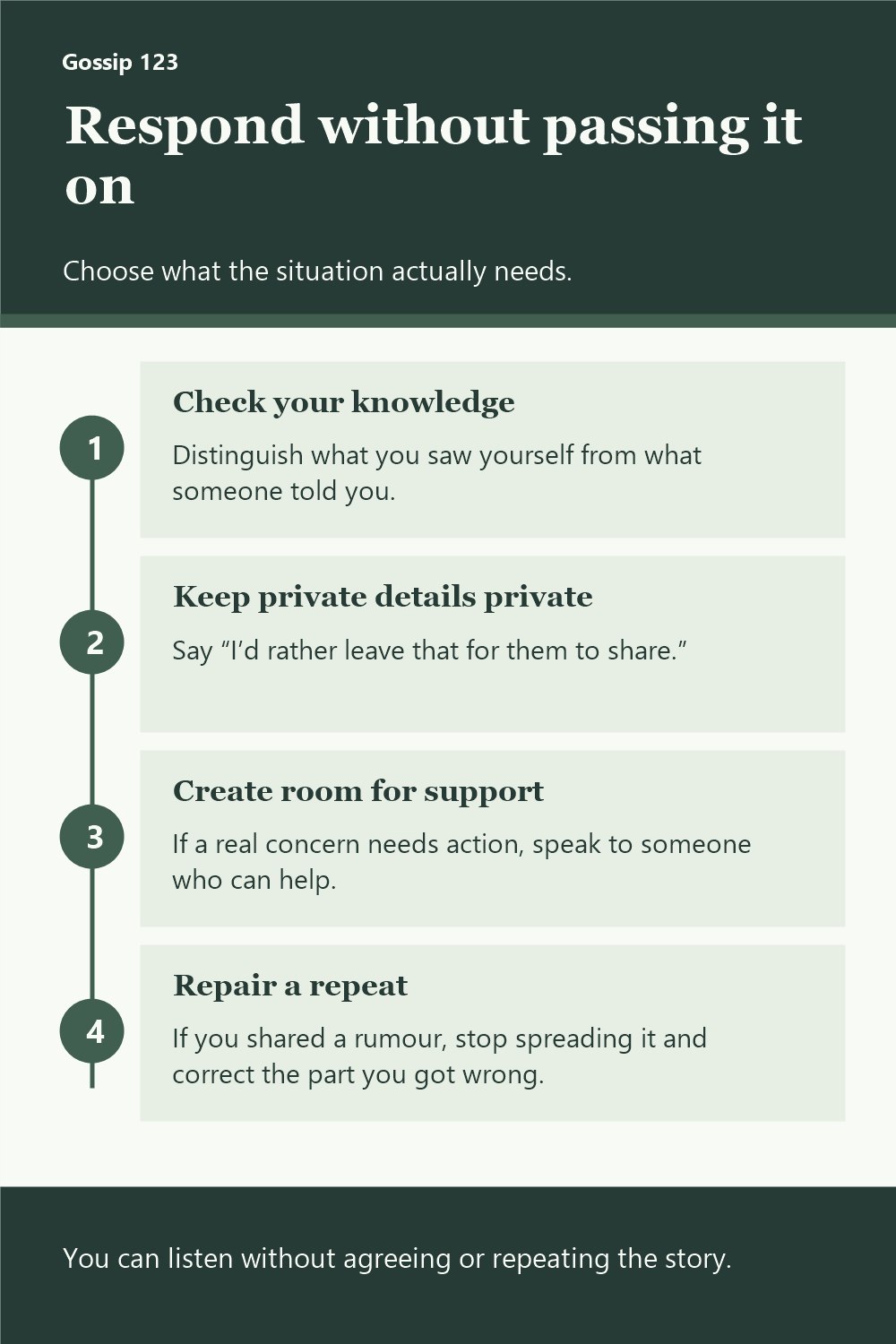
Read the infographic in text
Respond without passing it on Choose what the situation actually needs.
- Check your knowledge Distinguish what you saw yourself from what someone told you.
- Keep private details private Say “I’d rather leave that for them to share.”
- Create room for support If a real concern needs action, speak to someone who can help.
- Repair a repeat If you shared a rumour, stop spreading it and correct the part you got wrong.
You can listen without agreeing or repeating the story.