

Waiting for news, facing a change at work or not knowing where a relationship is going can leave you searching for an answer you cannot yet get. Uncertainty may include opportunities, but it can also involve real loss, risk or practical difficulty. You do not have to call it a blessing before asking for help.
A useful starting point is to separate the information you have, the questions still open and the next decision that is actually yours. This will not make the future certain. It can make the next part of the day less tangled and help you see what kind of support would be useful.
In this article
Separate what you know from what you fear
Choose one concern and make three short notes. Keep them specific enough that you can return to them when your thoughts start circling:
- What I know: the information that is available now.
- What I do not know: the question that has not been answered.
- What happens next: a relevant action, source of information or time to review.
For example: “The appointment has been rescheduled. I do not yet have a new date. I can ask the booking team when I should follow up.” That is different from treating “It will never happen” as established information.
Do not use this exercise to dismiss a real problem. You might have clear evidence that a deadline, payment or agreement is being missed. Acknowledging that fact can help you seek practical support without needing to predict everything that follows.
Choose one action within reach
Ask what needs attention today. You might gather a document, ask a direct question, tell someone a plan is provisional or make an alternative arrangement. Choose an action that addresses the concern, rather than trying to gain control over every possible outcome.
If there is nothing useful to do immediately, identify the next point at which information or a decision will be available. Waiting can be a deliberate part of a plan. You do not have to fill the gap with constant preparation or turn every uncertain situation into a self-improvement project.
For a decision that cannot wait, consider the information you have and the limits you need to protect. A provisional choice may be enough for now. Where possible, state what would lead you to revisit it: “If the date changes again, I will make a different arrangement.”
Give information-seeking a purpose
Before checking a message, news feed or update, ask what answer you expect to find and whether new information is likely to be available. You might decide to check after a promised response time instead of repeatedly refreshing the same page.
Use a relevant source. For an appointment, ask the service handling it; for a work arrangement, check with the person responsible. Other people’s stories or predictions may feel compelling without telling you what will happen in your case. Keep personal meaning separate from verified practical information.
If you enjoy spiritual reflection, prayer or intuitive journaling, you can use it to explore your values or find comfort. It does not require treating a feeling, sign or reading as proof of a future event. You can hold a belief while still checking facts and protecting your choices.
Keep some ordinary care and connection
Choose a familiar activity that is available to you: preparing a meal, spending time with someone you trust or making space for rest. The point is to support the day you are living, not to prove you have stopped worrying. A pleasant moment and an unresolved concern can exist together.
Tell a trusted person what would help. You might want company, help with a phone call or someone to listen without predicting the outcome. You can also set a limit on repeated discussion if it leaves you more overwhelmed. Support should fit your needs rather than become another demand.
The NHS guide to change and uncertainty offers further practical ideas. Choose what feels useful and realistic; you do not have to force gratitude, stay positive or become comfortable with every unknown.
Get support and revise the plan
Match the help to the difficulty. A problem involving housing, work, money or health may need relevant practical or professional support alongside emotional care. Asking for that help is a response to the situation, not evidence that you failed to cope independently.
If worry is persistently affecting sleep, concentration or daily activities, seek appropriate mental-health support. You do not have to wait until you can explain everything clearly. Describe what you are noticing and how it affects your day.
When new information arrives, review the plan without judging yourself for not knowing it earlier. You may need a different action, more time or additional help. The aim is to respond to what is happening with the resources you have, rather than to become someone who never feels uncertain.
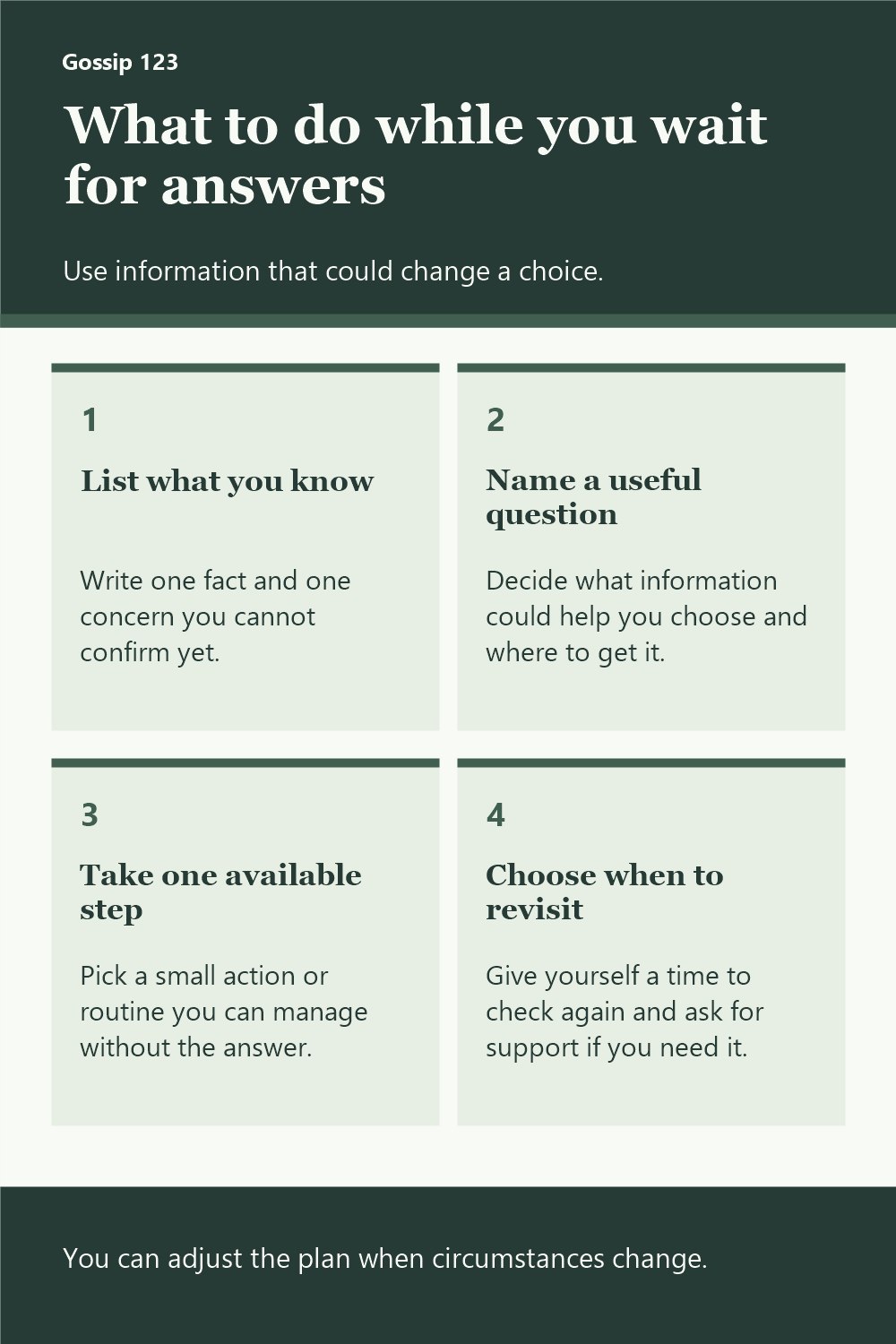
Read the infographic in text
What to do while you wait for answers Use information that could change a choice.
- List what you know Write one fact and one concern you cannot confirm yet.
- Name a useful question Decide what information could help you choose and where to get it.
- Take one available step Pick a small action or routine you can manage without the answer.
- Choose when to revisit Give yourself a time to check again and ask for support if you need it.
You can adjust the plan when circumstances change.