

An old friendship can matter to you and still feel difficult now. You may share memories but want less contact, need a concern taken seriously or realise that your lives have moved in different directions. You do not have to label the other person toxic before considering a change.
Look at what happens between you, what you need and whether a conversation would be useful and safe. Distance, a different kind of friendship or an ending can all be choices to consider.
On this page
Notice the pattern without guessing motives
Describe a few concrete experiences: a confidence was repeated, plans were cancelled without notice or conversations regularly included insults. Consider the effect on you as well as whether the person listens when you raise a concern.
Different interests or a quieter period do not automatically mean a friendship is harmful. Health, disability, money, grief or care responsibilities can affect availability. Someone may value you while being unable to offer the kind of contact you want.
Uneasy feelings are worth noticing, but they do not prove what another person intends. You can pause, ask a question or protect your privacy while you consider what you know. One cancelled plan does not give you enough information to predict what the friendship will become.
Decide whether to ask for a change
If you want to continue and a conversation feels safe, name one issue and a clear request: “I told you that privately. Please ask me before sharing anything else about it.” Or, “Last-minute cancellations are difficult for me. Could we make plans only when we both expect to be available?”
Listen to the answer, including any limits your friend explains. They may apologise, offer a different arrangement or say that they cannot provide what you want. You can consider that information without arguing them into a promise.
Notice what happens after the conversation. Does the person respect the request or discuss it honestly? Repeated dismissal is different from one misunderstanding. Equally, one apology does not require you to feel comfortable immediately.
Choose the distance you want
You might prefer occasional messages, meeting only in a group, avoiding a particular topic or taking a break. A friendship does not have to remain as close as it once was to have meant something.
State a limit in terms of what you will do: “I am not available for late-night calls,” or “I will leave the conversation if it becomes insulting.” Choose a response you can follow through on, rather than a threat intended to change someone’s feelings.
If contact has simply become less frequent for both of you, you may not need a formal announcement. If the other person is asking for plans you do not want, a brief honest answer can be clearer than repeatedly agreeing and cancelling.
If you want to end the friendship
Where it is safe and useful, keep the message straightforward: “I do not want to continue this friendship. I wish you well, but I am not available for further personal conversations.” You can be respectful without offering an extensive list of faults.
You do not owe repeated explanations or a final meeting. If someone responds with threats, harassment or attempts to monitor you, seek private support and consider a safety plan before deciding how to change contact. The right approach depends on the situation, not on a rule that everyone deserves the same ending.
If you share friends or a community, decide what information you want to share. “We are no longer close, and I do not want messages passed between us” may be enough. Avoid recruiting others to punish the person or repeating private details to justify your choice.
Make room for your feelings afterward
You may feel sadness, relief, guilt or a mixture. Missing the good parts does not automatically mean the decision was wrong. You can remember what mattered while recognising why the present arrangement did not work for you.
Keep some room for support and ordinary interests. Reach out to someone you trust, return to an activity or make a small plan that suits your energy. Ending one friendship does not guarantee that new friendships will arrive, and you do not need to rush to replace it.
If you later consider reconnecting, ask what has changed and what contact you actually want. History can be part of that decision without becoming an obligation to restore the same closeness.
Read the infographic in text
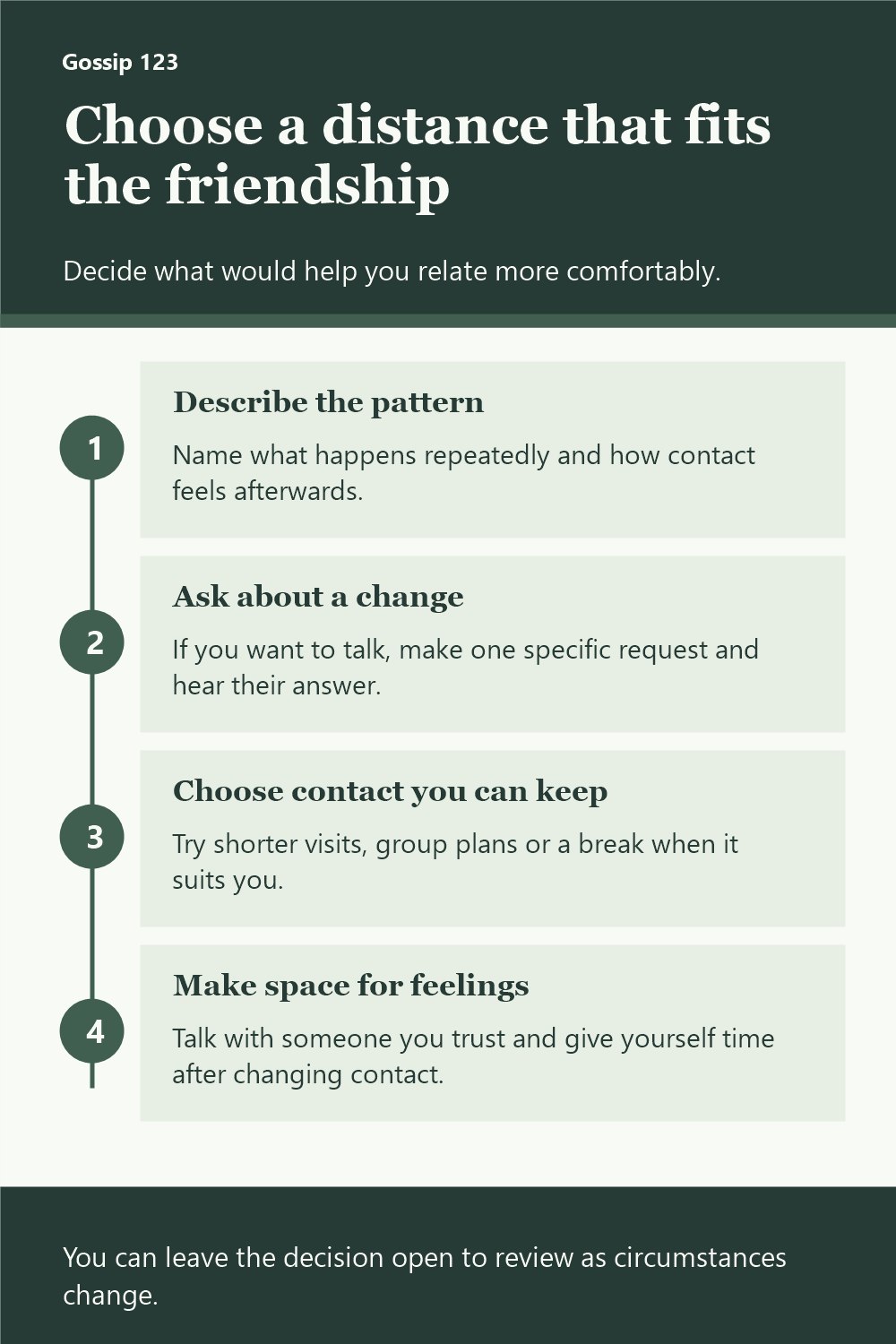
Choose a distance that fits the friendship Decide what would help you relate more comfortably.
- Describe the pattern Name what happens repeatedly and how contact feels afterwards.
- Ask about a change If you want to talk, make one specific request and hear their answer.
- Choose contact you can keep Try shorter visits, group plans or a break when it suits you.
- Make space for feelings Talk with someone you trust and give yourself time after changing contact.
You can leave the decision open to review as circumstances change.